
RC Makati Braves Rivers and Trails, Meets Dumagat-Remontados

Reaching the Dumagat-Remontado communities of Laiban and Mamuyao in Tanay, Rizal was no ordinary trip. It took nearly an entire day—crossing eight rivers, navigating rough mountain roads, and foot-trekking portions of the route—to reach the communities. But for RC Makati, the journey was important: to meet the Indigenous Peoples where they live, see their situation firsthand, listen to their concerns, and work with them in identifying possible solutions to the challenges they face every day.
On September 24, RC Makati, led by Pres. Chris Ferareza, together with PP Freddie Borromeo and Hope Mission Chair Nicky Ramos, visited Barangays Laiban and Mamuyao as part of the continuing community assessment for the Club’s BERDE Program.
Joining them were representatives from the Rotary Club of Tanay, led by Pres. Mart Gerones and Rtn. Mildred Uy; Rotaract Club of Makati representatives Pres. Princess Pol, Karylle Dotaro, John Tulaña, and Ron Saquing; and Rotaract Club of Rising Tanay CP Justin Uy. Also participating in the visit were UP Land Grant Management Officer Rey Lorida, Romeo Porciuncula of Tanay’s Municipal Social Welfare and Development Office (MSWDO), and Trina Tuazon of the National Commission on Indigenous Peoples (NCIP IV-A).
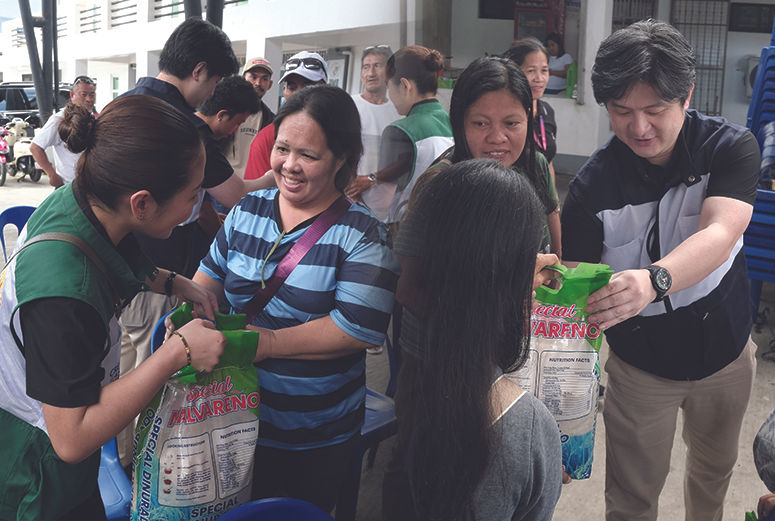
Building on the Club’s Food Share Program, implemented in partnership with Kabisig ng Kalahi and launched in the area in July, the visit explored how livelihood assistance could help Dumagat-Remontado families strengthen their farming activities and develop more sustainable sources of income.
Rather than simply bringing predetermined assistance, the visit focused on listening and learning directly from the communities. Through dialogues with residents and community leaders, as well as a personal visit to their farms, the delegation gained a closer understanding of their day-to-day realities, available resources, farming practices, challenges, and aspirations.
The Rotaractors also conducted a community needs assessment using a tool they developed to gather information on the residents’ existing resources, challenges, and livelihood priorities. The assessment provided community members an opportunity to identify their own concerns and share what they believe would help improve their livelihoods.
By entrusting this responsibility to its Rotaractors and giving them the opportunity to see Rotarians in action, RC Makati is cultivating the next generation of leaders, consistent with its strategic pillar of mobilizing young ethical and service-oriented leaders.
Listening to the Farmers of Laiban
In Barangay Laiban, the delegation met with Food Share Program beneficiaries and community leaders, including Indigenous Peoples leader May Bacos and representatives of the Samahan ng mga Magsasakang Dumagat- Remontados ng Laiban (SuMaDuReLa). RAC member Karylle introduced the purpose of the assessment, while Pres. Chris and Pres. Mart of RC Tanay addressed the participants.
Farmers described their largely manual planting methods and the crops they grow, including okra, squash, and mustard greens. During the discussion, ube emerged as a potential high-value livelihood crop, given its current market demand. UP Land Grant Management Officer Rey will work with RC Makati in providing training on ube cultivation, helping community members acquire the technical knowledge and skills needed to explore this livelihood opportunity.
The farm visit revealed a pressing concern: insufficient water for cultivation despite a potential river source during summer. The discussions underscored the need for a suitable water solution, with RC Tanay committing to oversee ground-level coordination and implementation.
Participants also explored the possibility of a community-shared carabao and farm implements to assist with farm work. They recognized that such support would require an experienced local caretaker, a fair and equitable schedule for use, and clear responsibilities for feeding, maintenance, and animal welfare.
Following the farm visit and community assessment at the Tribal Hall, the delegation shared lunch with their hosts. Residents prepared tinolang native na manok and fried tilapia, complemented by beef kaldereta and pinapaitan brought by PP Freddie Borromeo. The meal offered a warm opportunity for fellowship and further conversation with the community.
Exploring Livelihood Opportunities in Mamuyao
In Barangay Mamuyao, the dialogue continued with farmers and community representatives, including Indigenous Peoples Mandatory Representative (IPMR) Adelina dela Cruz. Residents shared how adverse weather had damaged crops such as string beans, beans, and okra. They identified a solar pump as a priority need to improve access to water during summer, subject to further assessment of its feasibility.
Ube and turmeric were identified as promising livelihood opportunities that could help enhance the income and improve the quality of life of families within the community. The exchange highlighted the value of technical guidance on planting, crop care, harvesting, and potential processing. Before investing in equipment, participants recognized the need to establish production capacity, maintain records, and understand market and transportation requirements.
For the proposed community-shared carabao and farm implements, community members expressed their willingness to prepare an agreement covering its care and use. A designated caretaker, proper rest periods, and an equitable borrowing schedule and rotation of usage would be essential to making the arrangement work.
For Laiban and Mamuyao, this could mean more than simply providing farm inputs. The findings from the community assessment will help RC Makati and its partners determine the appropriate combination of agricultural training, improved water access, shared farm resources, and livelihood development that can make farming more productive and sustainable.
The visit reinforced an important principle behind BERDE – solutions should be developed with the community and in consultation with its residents, based on its resources, priorities, capabilities, and vision for the future. BERDE (Building Edible, Resilient, and Dynamic Environments) is a sustainability initiative of RC Makati this Rotary year that aims to promote greater self-sufficiency among the communities the Club serves.
Through productive green spaces, climate-smart agricultural practices, technical training, and active community participation, BERDE seeks to strengthen food security, environmental stewardship, livelihood opportunities, and community resilience.
The program focuses on identified solutions such as Aquaponics, Community Cooperative Formation, and Community Vegetable Gardening. The Dumagat-Remontado communities of Laiban and Mamuyao fall under the Community Vegetable Gardening component, building on their existing farming practices while addressing challenges that limit their productivity and livelihood opportunities.
By listening first and planning together, RC Makati hopes to help the Dumagat-Remontado farmers build not only more productive farms, but communities that are increasingly self-sustaining, resilient, and empowered to create opportunities from the resources around them.

Hope Mobile Proves Awesome Resilience
With the rough terrain and multiple river crossings along the way, Hope Mobile was once again put to the test—this time, its 4x4 capability proved invaluable in reaching the remote communities and exceeded expectations. Thank you, Mazda Philippines, for helping RC Makati go the extra mile—quite literally—to reach the communities we serve!


Comments